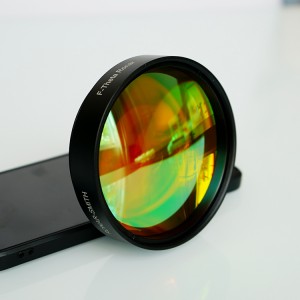
Aspheric Lenses for imaging, collimation and focusing


Aspheric Lenses for imaging, collimation and focusing
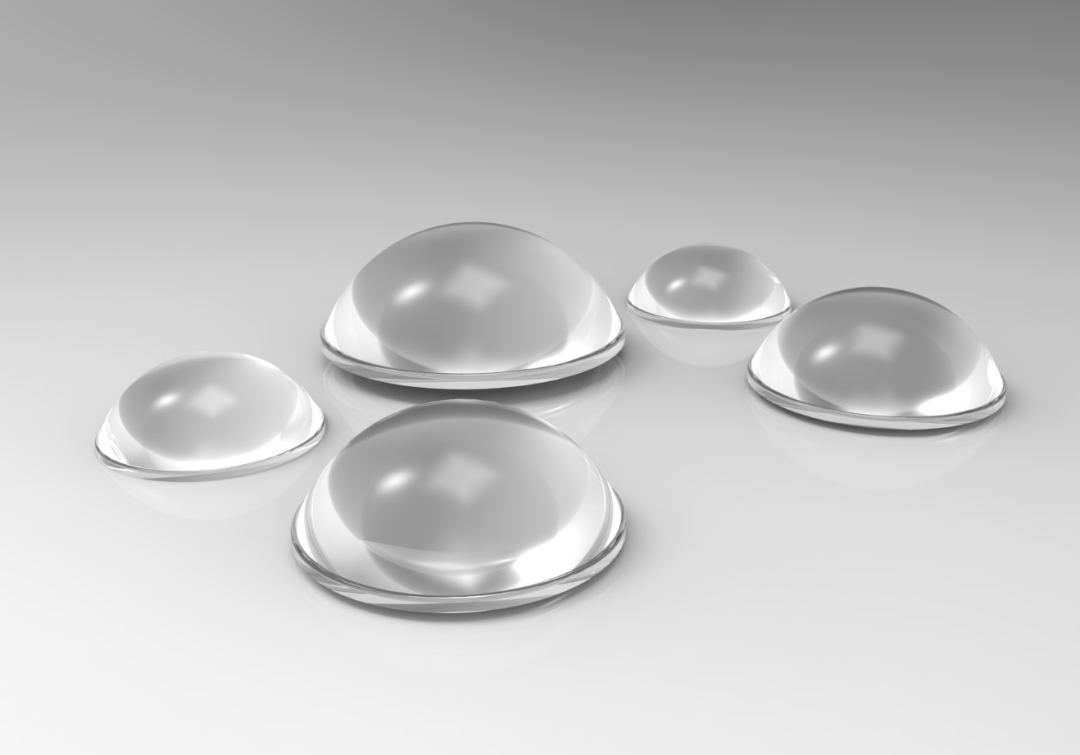
Imaging Capabilities:
Aspheric lenses are commonly utilized in imaging lenses such as large-aperture lenses, wide-angle lenses, fisheye lenses, and zoom lenses to expand the field of view. By optimizing the surface curvature, they can effectively reduce or eliminate edge distortion caused by spherical lenses, thereby enhancing image quality. These lenses are widely applied in various optical devices and systems, including microscopes, night vision devices, infrared thermal imagers, and temperature recorders.
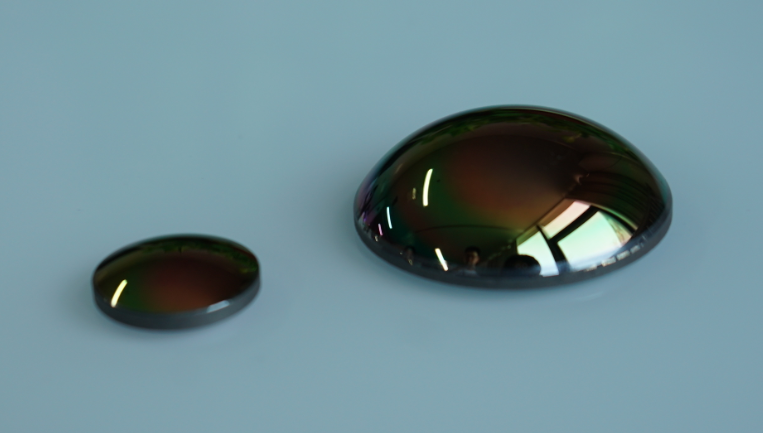
Infrared Aspheric Molded Lens Selection Table
| Part No. | Focal Length (mm) | F/# | Detector Type | Horizontal FOV |
| M-f1.5F1.3-80-34 | 1.5 | 1.3 | 80×80-34 | 120° |
| M-f1.9F1.3-80-34 | 1.9 | 1.3 | 80×80-34 | 90° |
| M-f2.7F1.3-80-34 | 2.7 | 1.3 | 80×80-34 | 60° |
| M-f4F1.2-320-12 | 4 | 1.2 | 320×240-12 | 56° |
| M-f5.3F1.3-320-12 | 5.3 | 1.3 | 320×240-12 | 42° |
| M-f6.3F1.0-320-17 | 6.3 | 1.3 | 320×240-17 | 50° |
| M-f7.7F1.3-320-17 | 7.7 | 1.3 | 320×240-17 | 41° |
| M-f9F1.3-320-17 | 9 | 1.3 | 320×240-17 | 35° |
| M-f15F1.2-640-10 | 15 | 1.2 | 640×512-10 | 25° |
| M-f15F1.0-384-17 | 15 | 1 | 384×288-17 | 25° |
| M-f19F1.1-640-17 | 19 | 1.1 | 640×480-17 | 32° |
| M-f20F1.2-640-10 | 20 | 1.2 | 640×512-10 | 18° |
| M-f24F1.2-640-17 | 24 | 1.2 | 640×480-17 | 26° |
Aspheric lenses deliver excellent performance for laser collimation. Lasers are single-wavelength light sources, and spherical aberration usually prevents a single spherical lens from achieving diffraction-limited performance when focusing or collimating light. By optimizing its curved surface profile, a single aspheric lens perfectly eliminates spherical aberration to realize precise laser collimation. This feature gives aspheric lenses remarkable advantages in applications such as laser diodes and fiber coupling.

Laser Collimating Lens Selection Table
| Part No. | Focal Length (mm) | Working Wavelength (um) | Numerical Aperture | Clear Aperture (mm) | Working Distance (mm) |
| COL-D2.5-F0.91 | 0.91 | 4.2 | 0.86 | 2.5 | 0.66 |
| COL-D3-F1.47 | 1.47 | 9.2 | 0.83 | 3 | 0.63 |
| COL-D2.6-F1.5 | 1.5 | 2.7 | 0.72 | 2.6 | 1.24 |
| COL-D4-F1.87 | 1.87 | 9.2 | 0.85 | 4 | 0.72 |
| COL-D5-F3 | 3 | 7.8 | 0.71 | 5 | 2.35 |
| COL-D5-F4 | 4 | 2.5 | 0.56 | 5 | 3.05 |
| COL-D7.6-F5.95 | 5.95 | 4.1 | 0.56 | 7.6 | 5 |
| COL-D10-F19.04 | 19.04 | 2.5 | 0.23 | 10 | 16.63 |
Focusing Capabilities:
The surface profile of aspheric lenses can be custom-designed to focus light into a smaller spot size. This capability is particularly critical in high-precision applications such as laser processing, laser cutting, and laser welding, where it significantly improves the focusing efficiency and accuracy of the system. Furthermore, aspheric lenses are ideal for laser beam shaping. By adjusting the lens surface profile and parameters, the cross-sectional shape and divergence angle of the laser beam can be precisely controlled to meet the requirements of various applications. For instance, in laser marking and laser engraving, beam shaping enables finer and more precise processing results.
Focusing Lenses Selection Table
| Part No. | Focal Length (mm) | Numerical Aperture | Outer Diameter | Working Distance (mm) |
| LGM-1.6-0.3FL | 0.3 | 0.65 | 1.6 | 0.150 / 0.975 |
| LGM-1.2×1.2-0.39FL | 0.39 | 0.55 / 0.13 | 1.20 × 1.20 | 0.284 / 1.902 |
| LGM-1.2×1.2-0.43FL | 0.43 | 0.06 / 0.66 | 1.20 × 1.20 | 5.00 / 0.270 |
| LGM-1-0.55FL | 0.55 | 0.50 / 0.10 | 1 | 0.30 / 3.030 |
| LGM-1.2×1.2-0.55FL | 0.55 | 0.50 / 0.10 | 1.0 × 1.0 | 0.250 / 2.874 |
| LGM-2.5-0.7FL | 0.7 | 0.6 | 2.5 | 0.33 |
| LGM-3-0.75FL | 0.75 | 0.47 | 3 | 0.43 |
| LGM-1.824-1FL | 1 | 0.62 | 1.824 | 0.24 |
| LGM-4.93-1.14FL | 1.14 | 0.124 / 0.430 | 4.93 | 1.129 / 4.809 |
| LGM-2-1.41FL | 1.41 | 0.502 | 2 | 1.2 |
| LGM-2.75-1.42FL | 1.42 | 0.62 | 2.75 | 0.86 |
| LGM-2.65-1.49FL | 1.49 | 0.53 | 2.65 | 1.02 |
| LGM-1.7-1.941FL | 1.94 | 0.15 / 0.15 | 1.7 | 3.570 / 3.570 |
| LGM-3-2FL | 2 | 0.5 | 3 | 1.4 |
| LGM-2.05-2.51FL | 2.51 | 0.201 | 2.05 | 1.731 |
| LGM-3-2.51FL | 2.51 | 0.317 | 3 | 1.761 |
| LGM-4-2.54FL | 2.54 | 0.66 | 4 | 1.55 |
| LGM-4.5-2.75FL | 2.75 | 0.55 | 4.5 | 2.16 |
| LGM-4.7-2.76FL | 2.76 | 0.52 / 0.26 | 4.7 | 7.090 / 2.713 |
| LGM-4-2.976FL | 2.976 | 0.52 | 4 | 1.56 |
| LGM-6.325-3.1FL | 3.1 | 0.7 | 6.325 | 1.8 |
| LGM-3-3.5FL | 3.5 | 0.4 | 3 | 2.3 |
| LGM-3.5-3.5FL | 3.5 | 0.38 | 3.5 | 2.3 |
| LGM-1.8-3.7FL | 3.7 | 0.21 | 1.8 | 3.03 |
| LGM-6.325-4FL | 4 | 0.6 | 6.325 | 2.4 |
| LGM-6.325-4.03FL | 4.03 | 0.64 | 6.325 | 2.68 |
| LGM-5.585-4.13FL | 4.13 | 0.55 | 5.585 | 2.2 |
| LGM-5.42-4.47FL | 4.47 | 0.47 | 5.42 | 3.08 |
| LGM-3-4.5FL | 4.5 | 0.3 | 3 | 3.46 |
| LGM-6.325-4.5FL | 4.5 | 0.55 | 6.325 | 3.08 |
| LGM-6-4.6FL | 4.6 | 0.5 | 6 | 2.7 |
| LGM-2-5FL | 5 | 0.15 | 2 | 4.37 |
| LGM-3-6FL | 6 | 0.21 | 3 | 4.9 |
| LGM-2.79-6.1FL | 6.1 | 0.18 | 2.79 | 4.87 |
| LGM-7.2-6.2FL | 6.2 | 0.4 | 7.2 | 3.5 |
| LGM-6.65-6.7FL | 6.7 | 0.44 | 6.65 | 4.9 |
| LGM-6.51-7.5FL | 7.5 | 0.3 | 6.51 | 5.8 |
| LGM-9.936-8FL | 8 | 0.5 | 9.936 | 5.9 |
| LGM-6.325-9.9FL | 9.9 | 0.3 | 6.335 | 8.4 |
| LGM-11-10FL | 10 | 0.5 | 11 | 7.8 |
| LGM-6-11FL | 11 | 0.24 | 6 | 9.66 |
| LGM-6.325-11FL | 11 | 0.24 | 6.325 | 9.56 |
| LGM-6.325-12FL | 12 | 0.22 | 6.325 | 10.57 |
| LGM-6.325-13FL | 13 | 0.2 | 6.325 | 11.58 |
| LGM-6.325-14FL | 14 | 0.19 | 6.325 | 12.63 |
| LGM-4.985-15.04FL | 15.04 | 0.15 | 4.985 | 13.19 |
| LGM-6.5-15.29FL | 15.29 | 0.16 | 6.5 | 13.98 |
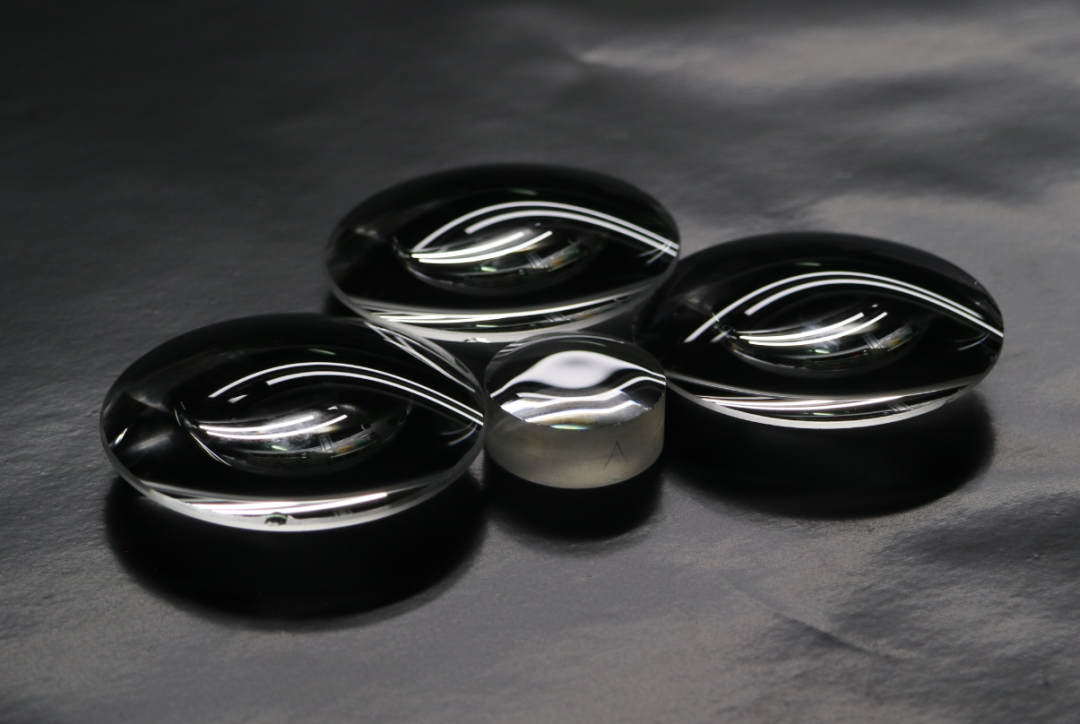
Manufacturing Process and Core Capabilities
The manufacturing of aspheric lenses involves multiple stages and a variety of production and testing equipment. Each stage requires strict control of process parameters and quality standards to ensure the final product meets performance and quality requirements.
At Edinburgh OE (Wavelength Opto-Electronic), we have mastered the core technologies for aspheric lens fabrication. We not only have professional optical designers to ensure the lens shape, curvature, and optical performance but are also equipped with the necessary production and testing equipment for the manufacturing process. This includes ultra-precision single-point diamond turning (SPDT) machines, ultra-smooth polishing and coating machines, Optotech aspheric processing equipment, and various testing instruments, ensuring that lens parameters such as focal length and surface profile meet all specifications. This capability means we can provide custom high-precision lenses for complex requirements and drive breakthrough applications in optoelectronics, medical, and scientific research fields.

PRODUCT CATEGORIES
Wavelength has been focused on providing high precision optical products for 20 years