
In laser 3D printing technology, the optical system acts as the “nerve center,” directly affecting printing accuracy, efficiency, and stability. Its core lies in the coordinated operation of a series of precision optical components—from laser beam conditioning to precise focusing within the build chamber, each component carries a unique technical mission.
Analysis of Core Optical Components in the Optical System
-Scanning Mirror: The “Commander” of High-Speed Dynamic Control
Function: Driven by precision servo motors, it deflects the laser beam at microsecond-level speeds to achieve dynamic control of the printing path.
Benefits:
1.High scanning speed: Low-inertia mirrors enable fast scanning, significantly improving production efficiency.
2.Micron-level positioning accuracy: Ensures edge sharpness of complex structures, suitable for precision medical devices or microelectronic components.
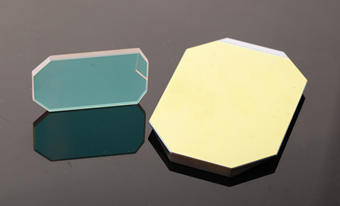
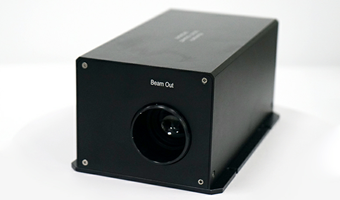
-Beam Expander: The “Regulator” for Beam Energy Optimization
Function: Expands the laser beam diameter, reduces the divergence angle, and improves energy density uniformity.
Benefits:
1..Eliminates Gaussian beam edge attenuation: Prevents uneven layer thickness and improves surface finish.
2.Matches scan lens parameters: Optimizes the focused spot size for higher resolution.
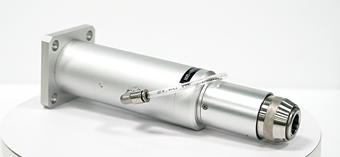
-Collimator: The “Calibrator” of the Beam Path
Function: Converts divergent laser light into parallel light, reducing energy loss during transmission.
Benefits:
1.Extends effective working distance: Suitable for large-format build chambers.
2.Improves energy utilization: Reduces laser power requirements and saves energy.
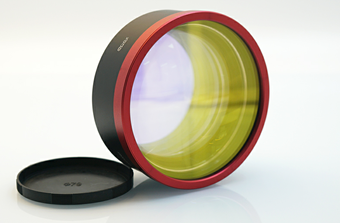
-F-Theta Lens: The “Final Link” of Precision Focusing
Function: Focuses the collimated laser beam onto the build plane and compensates for defocus errors through dynamic focusing.
Benefits:
1.Full-field focusing consistency: Spot size difference between edge and center is <5% during large-format printing.
2.Thermal deformation-resistant design: Maintains stable focal length under high-temperature environments, suitable for metal/ceramic sintering.
-Protective Window: The “Optical Barrier” of the Build Chamber
Function: Isolates dust and spatter inside the build chamber while maintaining high transmittance.
Benefits:
1.Coating process: Transmittance >98%, and high-temperature resistance prevents laser energy attenuation.
2.Modular quick-release design: Reduces cleaning and maintenance time by 70%, lowering downtime costs.
Technical Advantages: Redefining the Performance Boundaries of Optical Systems
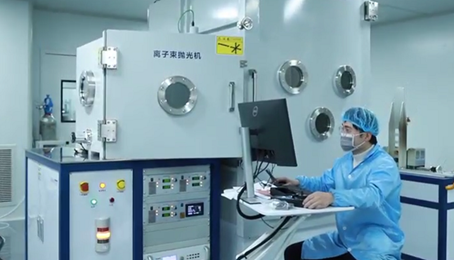
Ultra-precision lens processing: Ion beam polishing technology achieves surface accuracy of λ/10 (@632nm), eliminating astigmatism and spherical aberration.
Intelligent temperature compensation: Real-time monitoring of optical system thermal drift and dynamic adjustment of scanning mirror deflection angles ensure no precision degradation under high-temperature conditions.
Fully sealed anti-contamination design: The interior of the optical system is filled with inert gas to prevent mirror oxidation and ensure long service life.
Customized services: Optical parameters are optimized according to customer material characteristics (e.g., absorptivity, melting point), providing “end-to-end” solutions.
Product Selection Table
| Metal 3D Printing Optics | |
| Product Name | Model |
| YAG F-Theta Scan Lens | SL-1064-280-420Q-D14 |
| SL-1064-280-420Q-D14-V2 | |
| SL-1064-170-260Q-D14 | |
| SL-1064-320-450Q-V1 | |
| SL-1064-410-650Q-D20 | |
| SL-1064-410-650Q-D20-V1 | |
| YAG Continuous Zoom Beam Expander | BXZ-1064-1-4X-D6-CON |
| YAG Beam Expander | Fixed Magnification with QCS Interface |
| YAG Fiber Collimator | COL-1064-D34-F100Q-0.12-WC |
| COL-1064-D46-F150Q-0.1-WC | |
| COL-1064-D28-F75Q-0.1-WC | |
| Water-Cooled Square Housing | |
(with non-adjustable water-cooled QBH)COL-1064-D38.1-F150Q-WC-HP1COL-1064-D38.1-F200Q-WC-HP3COL-1064-D38.1-F140Q-WC-HP3COL-1064-D38.1-F125Q-WC-HP3COL-1064-D38.1-F100Q-WC-HP3COL-1064-D38.1-F75Q-WC-HP3COL-1064-D38.1-F135Q-WC-HP3COL-1064-D38.1-F150Q-WC-HP3COL-1064-D38.1-F115Q-WC-HP3
| Category | Product Name | Model |
| UV Curing Printing | 355nm F-Theta Scan Lens | SL-355-600-840-D15 |
| SL-355-600-840Q-D10 | ||
| SL-355-400-580Q-D15 | ||
| SL-355-500-750Q-D15 | ||
| SL-355-800-1117Q-D10 | ||
| SL-355-1050-1470Q-D14 | ||
| CO2 Printing | CO2 F-Theta Scan Lens | SL2-10.6-350-490Z |
| CO2 Reference Beam Expander | BET0105-WC | |
| CO2 Protection Window | WZ-10.6-D90-T3 |
Note: Q = Quartz, G = Glass, 420 = focal length, D14 = incident spot, V2 = version, HP = high power. Please contact us for specific product parameters.
| 3D Printing Optical Module Parameter Configuration | |||
| Parameter | Config 1 | Config 2 | Config 3 |
| Laser Power (W) | 2000 | ||
| Wavelength (nm) | 1060-1080 | ||
| Fiber Interface | QBH | ||
| F-Theta Focal Length (mm) | 254 | 420 | 650 |
| Collimator Focal Length (mm) | 75/100/115/125 | ||
| Clear Aperture (mm) | D35 | ||
| Galvo Specification (mm) | D14 | D20 | D20 |
| Working Distance A (mm) | ≥300 | ≥400 | ≥500 |
| Working Field Size (mm) | 170*170 | 280*280 | 410*410 |
Evolution of Optical Components Enables Industrial 3D Printing
In the era of Industry 4.0, the performance of laser 3D printing optical systems has shifted from “functional realization” to “ultimate optimization.” The coating process of every lens, the response speed of every scanning mirror set, and the energy utilization of every inch of the beam path are redefining the efficiency and possibilities of additive manufacturing. Wavelength Opto-Electronic supports customized services for 3D printing optical systems, offering a diverse selection of optical components and providing customers with optical solutions ranging from components to complete systems.
Post time: Oct-12-2026