
Product Recommendation: Diffractive Optical Elements (DOE)
I. Working Principle
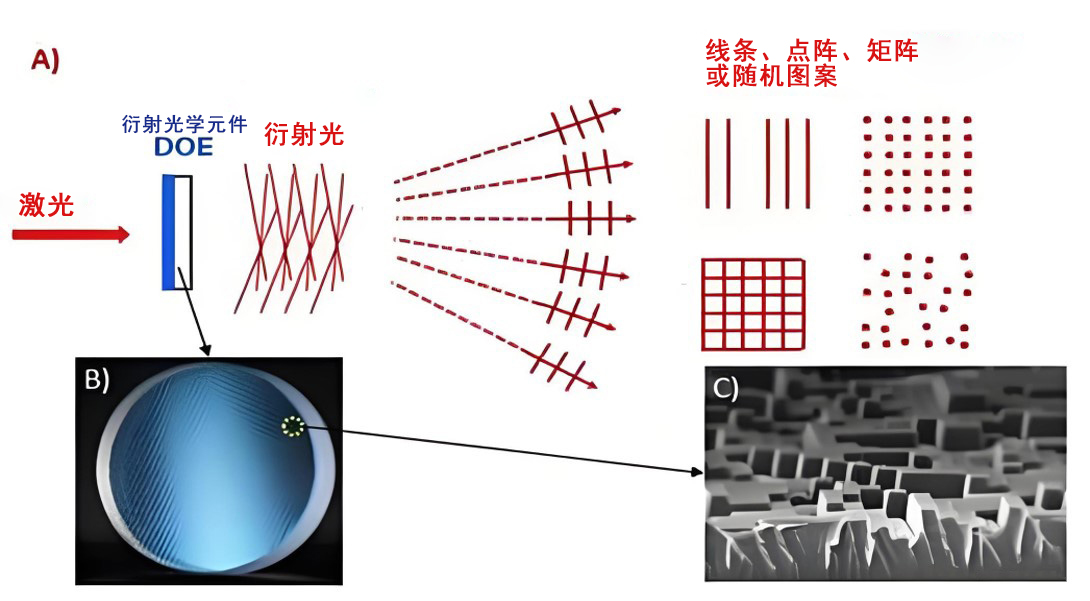
By using microstructures to modify the transmission phase of light waves passing through the diffractive optical element, the incident light is further phase-modulated so that light is distributed into different diffraction orders. Using this characteristic, by setting the diffraction orders and object distance, interference occurs at a certain distance (usually infinity or the focal plane of a lens) to form a specific light intensity distribution.
II. Product Introduction
1. Beam Shaping DOE
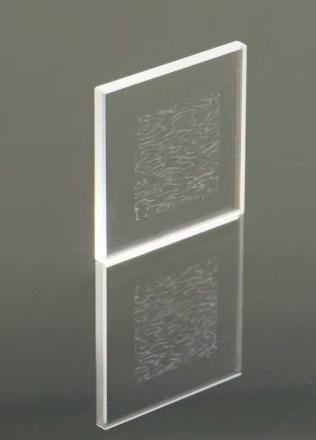
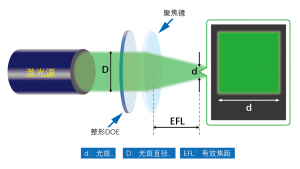
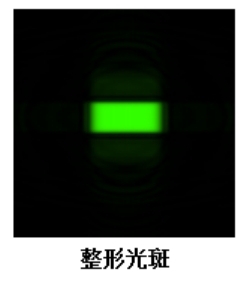
Beam shaping DOE is one of the most widely used diffractive optical elements. Its function is to obtain a flat-top beam with uniform energy distribution, steep edges, and a specific shape.
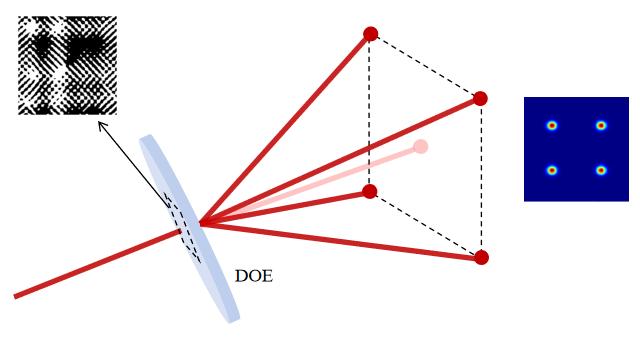
2.Beam Splitting DOE
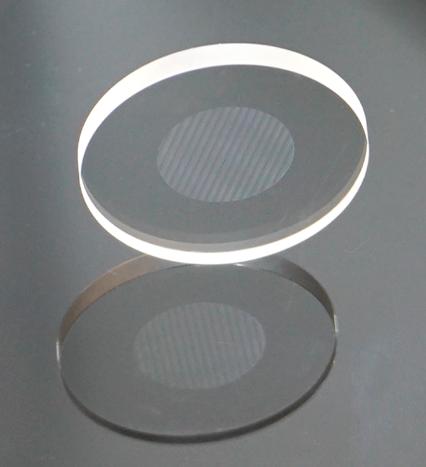
Beam splitting DOE is a precision planar optical element based on the principle of light diffraction and interference. As a core component of the new generation of beam splitting, it completely replaces the limitations of traditional prisms, coated beam splitters and other elements. With the advantages of high uniformity, high splitting accuracy and high energy utilization efficiency, it has become a key component in laser parallel processing, precision measurement, medical aesthetics, optical communication and other fields.
3. Beam Homogenizing DOE
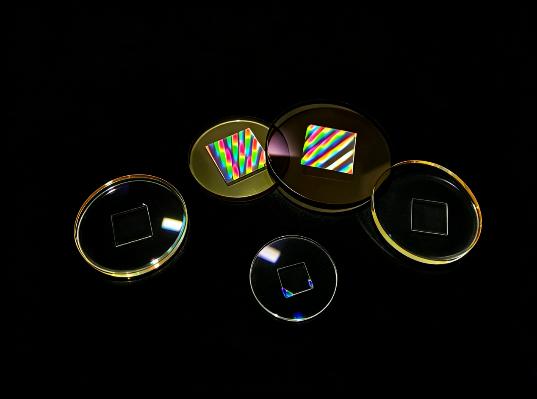
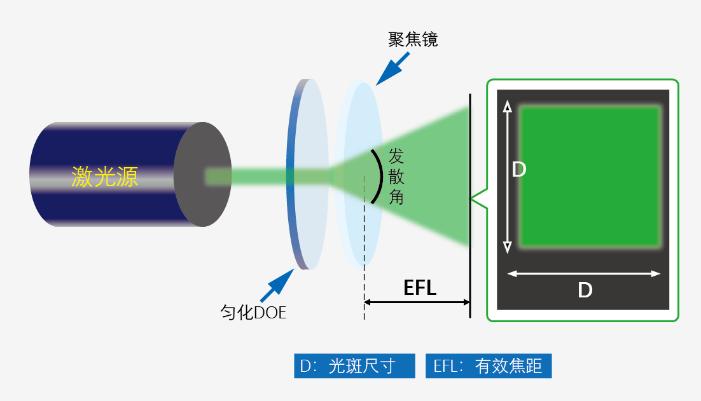
Beam homogenizing DOE is a precision optical element based on diffractive optical phase modulation technology. It is the core component to solve the problems of uneven laser brightness, excessive central intensity and weak edge intensity. It is widely used in high-demand scenarios such as laser processing, medical treatment, detection, lighting and scientific research.
III. Case Study (Beam Shaping)
Simulation Design
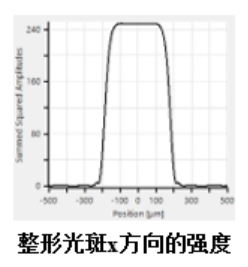
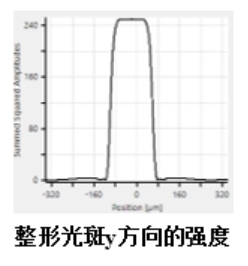
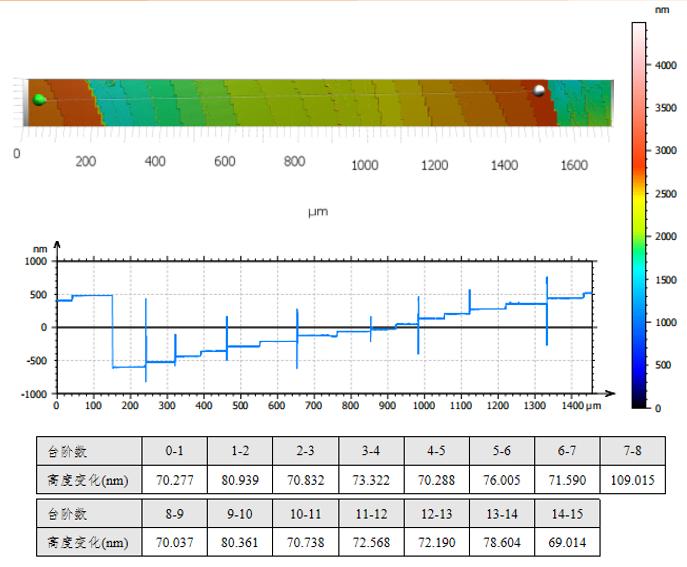
Morphology Characterization:
Beam Testing:
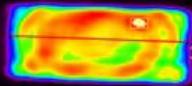
Beam profiler measurement
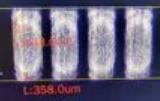
Actual laser beam projection test
IV. Product Specification Template (Customizable)
| Parameters | Technical Specifications | |
| System Parameters | Design Wavelength [nm] | 532 |
| Beam Quality (M²) | ≤1.3 | |
| Input Beam Size (e^-2)[mm] | 6 | |
| Focal Length of Focusing Module [mm] | 420 | |
| DOE Parameters | Clear Aperture Size [mm] | φ15 |
| Mechanical Outer Diameter [mm] | φ25.4 | |
| Phase Levels | High-level (8 & 16 levels) | |
| Output Parameters | Homogenized Beam Shape | Rectangular |
| Homogenized Beam Size (50%) [μm] | 300×150 | |
| Transition Zone Width (13.5%~90%) [μm] | 20 | |
| Homogenization Uniformity (RMS) | >90% | |
| Total Diffraction Efficiency(e^-2) | >90% | |
| Diffraction Limit (M2=1,e^-2)[μm] |
47.4 |
V. Industry Applications
Laser Precision Processing
Beam homogenization, splitting and shaping for wafer dicing, PCB drilling, glass processing, welding and cleaning, improving efficiency and yield.
3D Sensing & Machine Vision
Generating structured light dot arrays / line beams for facial recognition, industrial inspection, robot positioning and 3D measurement.
LiDAR & Autonomous Driving
Multi-line beam splitting and area array projection for solid-state LiDAR and environmental perception, simplifying systems and reducing costs.
Medical & Aesthetic Lasers
Providing uniform flat-top / dot matrix beams for hair removal, skin rejuvenation and ophthalmic treatment with safer, less painful and more uniform efficacy.
AR/VR & Near-Eye Display
Used for optical waveguide coupling, beam expansion and dispersion correction to achieve lightweight and large-field optical systems.
Scientific Research & Optical Communication
Covering optical tweezers, quantum optics, super-resolution microscopy, optical module splitting and combining, supporting cutting-edge technologies and high-speed communication.
Post time: Jun-02-2026