
When people think of laser processing, the first thing that comes to mind is often a Gaussian beam — energy concentrated at the center, like a sharp pinpoint of light. But in the power battery and precision electronics manufacturing sectors, ring beam systems have become a core tool for next-generation laser processing.
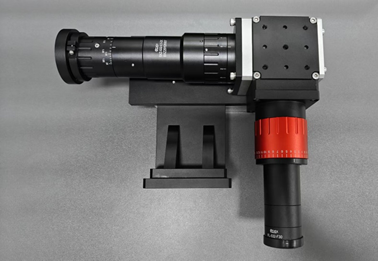
Simply put, a ring beam shapes the laser into an annular energy distribution. It comes in two forms: a pure hollow ring, and the industry’s most widely used composite ARM beam — an inner core plus an outer ring. A traditional Gaussian beam has its highest energy at the center, which easily causes severe spatter, porosity, and keyhole collapse when processing highly reflective materials like copper and aluminum, leading to workpiece failure. A composite ring beam, by contrast, allows independent control of the inner and outer ring power: the inner core delivers high energy to achieve the required penetration depth, while the outer ring provides gentler energy for preheating and stabilizing the molten pool. Working together, the inner and outer rings suppress spatter at the source and significantly improve welding yield.
This technology first gained traction in the new energy power battery industry, which remains its largest application today. In battery tray, cell terminal, and copper-aluminum busbar welding, copper and aluminum are highly reflective metals that cause high defect rates with conventional laser welding. The outer ring of the ring beam preheats the material in advance, reducing reflectivity, stabilizing the keyhole, and minimizing porosity and cracks — meeting the stringent airtightness and strength requirements of power batteries. It has become a standard optical solution on lithium battery production lines.
Beyond power battery welding, ring beams are also making a mark in precision electronics manufacturing. In PCB laser soldering, the low center energy of the ring beam allows the outer ring to heat the solder pad while avoiding the component pins in the middle — completing the solder joint without burning the component or damaging the PCB solder mask. This makes it ideal for high-reliability PCB assembly such as radar boards and medical device PCBA.
Wavelength OE’s Adjustable Ring Beam System adopts a precision optical design consisting of an axicon, a zoom beam expander, and a focusing lens. The axicon generates a Bessel ring beam, while the matched transmission lens group ensures coaxial alignment of the inner and outer beams, core-ring concentricity, adjustable inner/outer ring power range, adjustable ring width, diffraction efficiency, depth of focus, and beam uniformity. It also features a high damage threshold optical window and low thermal drift, ensuring molten pool stability during welding.
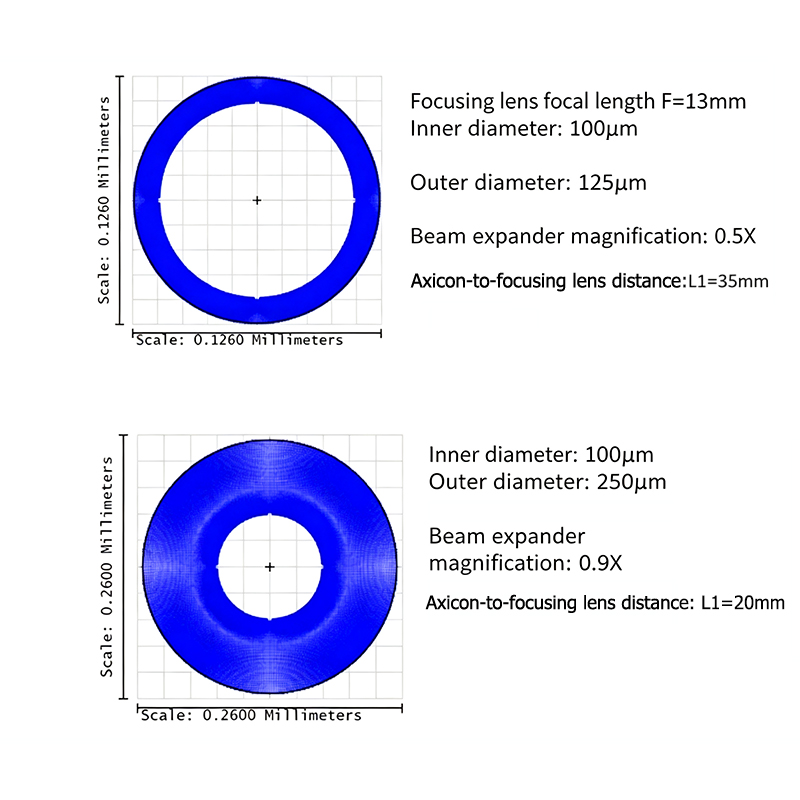
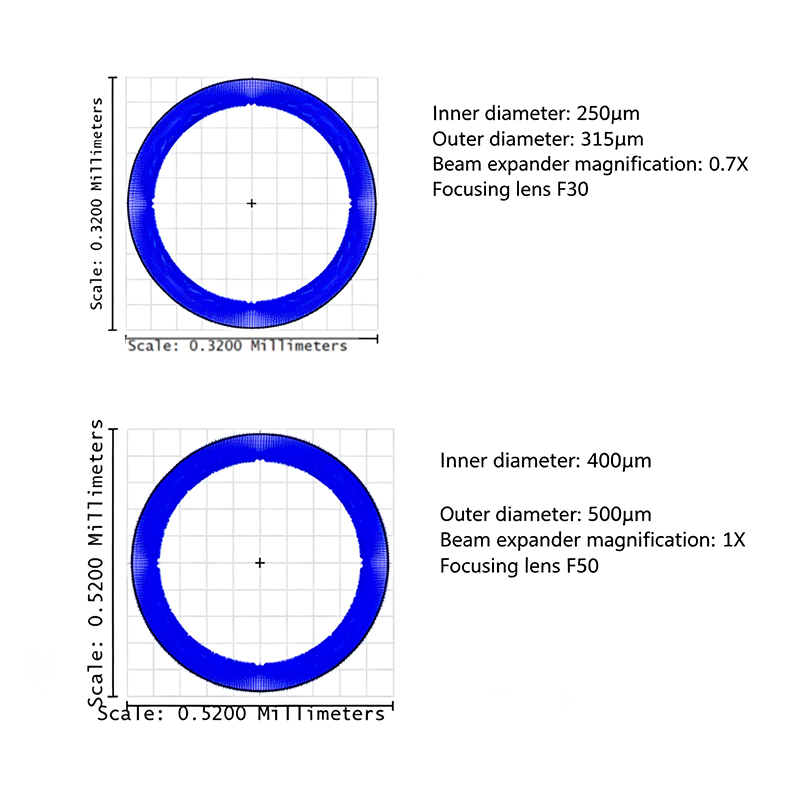
As the new energy and semiconductor industries continue to advance, manufacturing demands for welding quality and processing precision keep rising. The applications for ring beams continue to expand, bringing this technology into more precision processing scenarios and empowering more high-end manufacturing industries.
Post time: Sep-23-2026