
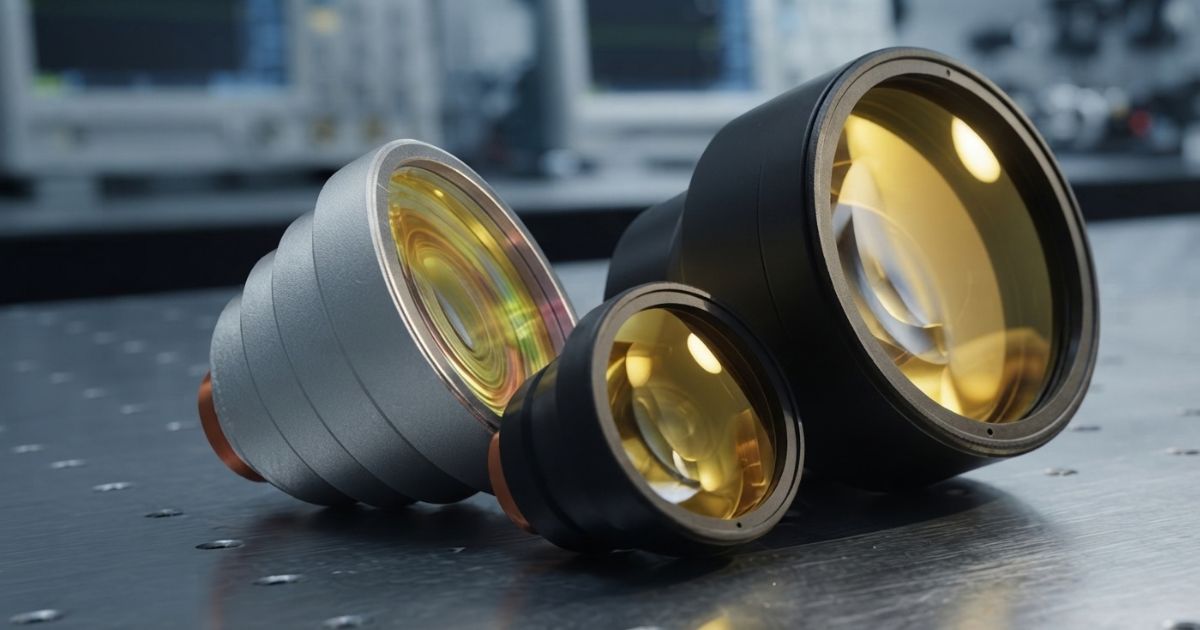
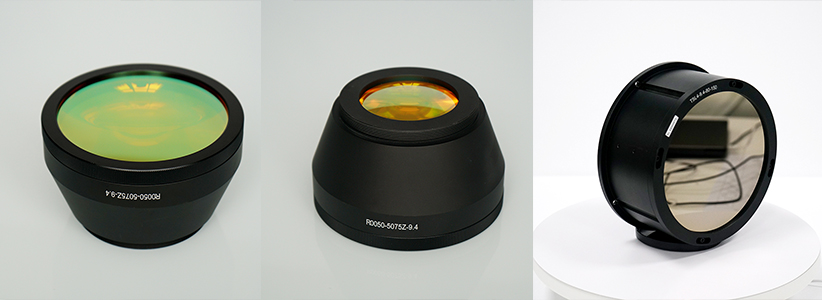
The TSL Series telecentric scan lenses are designed for 9.4 µm and 9.6 µm CO₂ laser galvo processing. The beam strikes the workpiece perpendicularly, ensuring excellent uniformity across the entire field, producing round, regular holes, straight cut sidewalls, and consistent marking results. The series includes 7 models, with processing fields ranging from 9×9 mm to 90×90 mm.
1. Why Choose 9.4/9.6 µm Wavelength CO₂ Lasers?
Conventional CO₂ lasers operate at 10.6 µm. Today, an increasing number of sealed-tube and RF CO₂ lasers offer tunable output in the 9.3–9.6 µm range:
-PET films and plastics: Cleaner cuts with a smaller heat-affected zone (HAZ)
-Glass and ceramics: Better material absorption, reducing micro-cracks
-Paper, cardboard, and packaging films: Sharp cut edges with minimal charring
-Thin films and flexible electronics: Higher precision in material removal processing
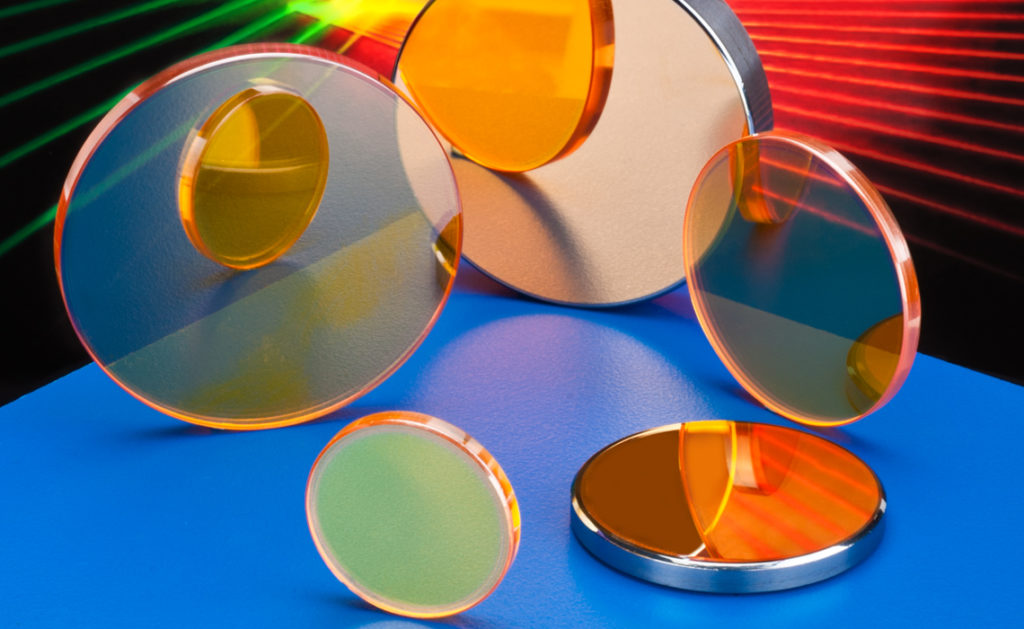
Standard f-theta lenses are coated and optimized for 10.6 µm. TSL lenses feature coatings specifically designed for 9.4–9.6 µm, maintaining high transmittance in this band.
2. Advantages of Telecentric Design
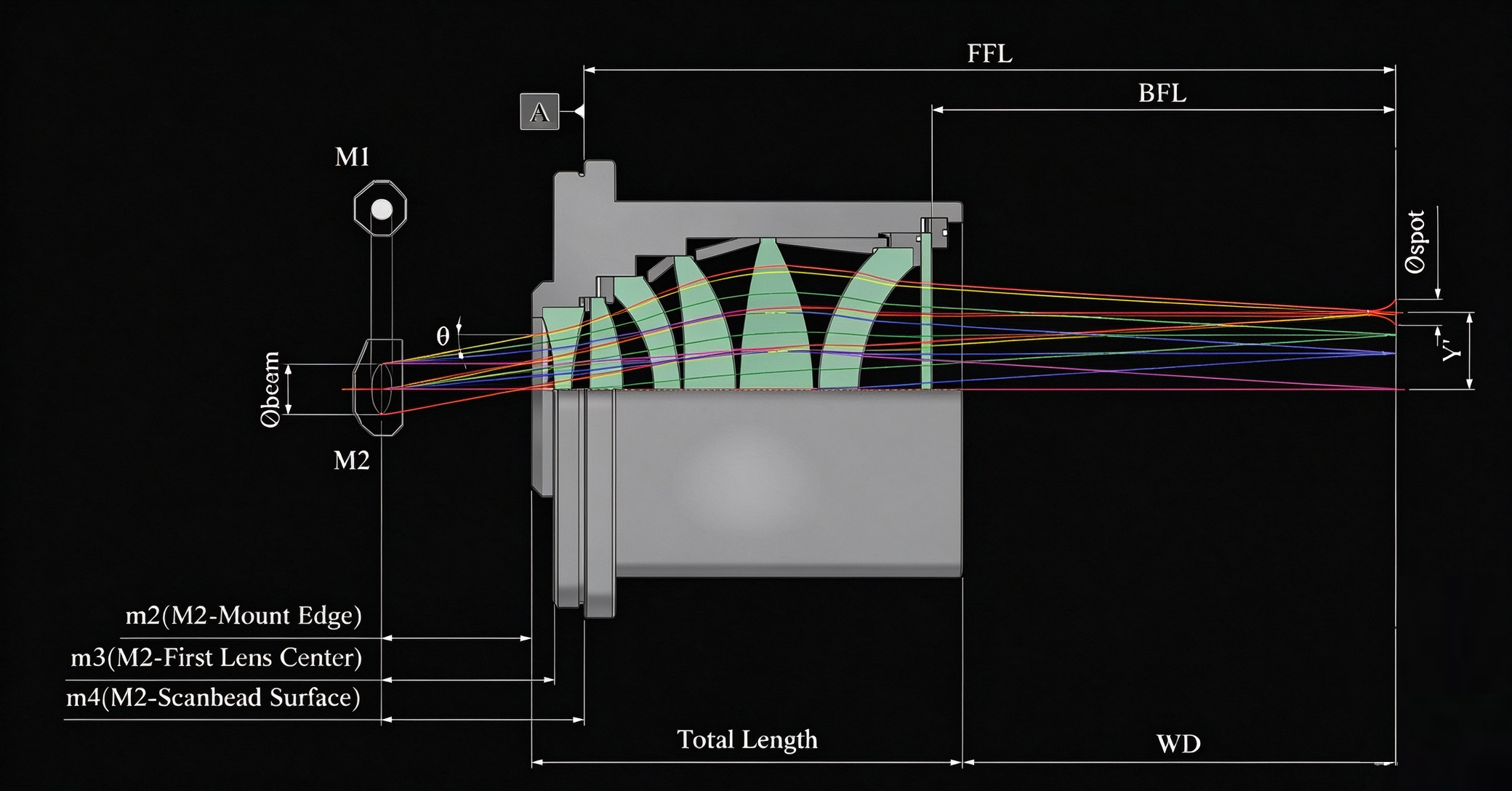
With standard f-theta lenses, the beam incidence angle increases toward the edge of the field. Telecentric lenses keep the chief ray parallel to the optical axis at all times:
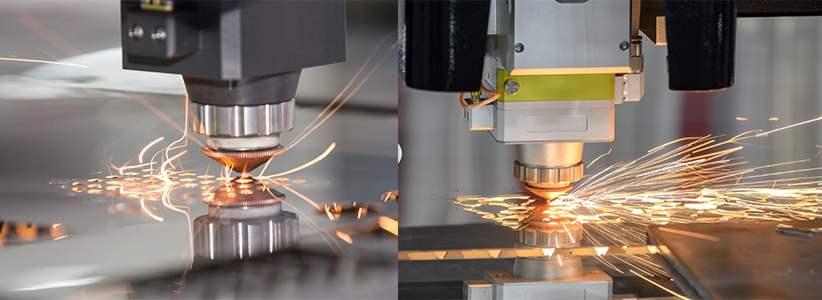
-Drilling: Holes are cylindrical—no tilt or elliptical distortion
-Thick/multi-layer cutting: No tapered sidewalls at the field edges
-Marking and engraving: uniform depth of focus, contrast, and spot shape across the entire field.
-Uneven or contoured workpieces: Slight height variations do not cause positioning offset, because the beam remains perpendicular at all times.
Note: The lens diameter of a telecentric lens must be at least equal to the scan field. Therefore, compared with standard f-theta lenses of the same specifications, the telecentric solution has a more limited field—which is the main reason this series uses medium-sized fields.
3. ZnSe Telecentric Scan Lens Selection Guide
All lenses use ZnSe (Zinc Selenide) optics with AR coatings matched to 9.4/9.6 µm:
Micro-fine processing (9×9 mm): TSL-9.4-9-40-D14, spot size approx. 34 µm—ideal for fine marking, thin-film scribing, and micro-hole drilling
Medium field (50×50 mm): The 75 mm focal length version offers a compact structure; the 100 mm focal length provides a working distance of 118.8 mm, facilitating the arrangement of fume extraction, fixtures, and air knives
Large field, high efficiency (70–90 mm): TSL-9.4-70-120 and TSL-9.4-90-170-D20 cover larger workpieces in a single pass, with correspondingly larger overall lens dimensions
Compatible with 9.6 µm sources: TSL-9.6-70-140ZA, field 70×70 mm
Medium-to-large field, small input beam: TSL2-9.4-60-100Z-D14, field 60×60 mm, input beam 14 mm—the longest working distance in the series (130.9 mm)
| Model | Wavelength | Focal Length (mm) | Scan Field (mm) | Input Beam (mm) | Thread Mount | Working Distance (mm) |
| TSL-9.4-9-40-D14 | 9.4μm | 40 | 9×9 | 14 | M80×1 | 36.18 |
| TSL-9.4-30-52 | 9.4μm | 52 | 30×30 | 20 | M85×1 | 32.26 |
| TSL-9.4-50-75 | 9.4μm | 75 | 50×50 | 20 | M85×1 | 70.4 |
| TSL-9.4-50-75Z-D14 | 9.4μm | 75 | 50×50 | 14 | M85×1 | 68.95 |
| TSL-9.4-50-100Z-D20 | 9.4μm | 100 | 50×50 | 20 | M85×1 | 118.84 |
| TSL2-9.4-60-100Z-D14 | 9.4μm | 100 | 60×60 | 14 | M92×1 | 130.9 |
| TSL-9.6-50-100G | 9.6μm | 100 | 50×50 | 15 | M85×1 | 106.1 |
| TSL-10.6-50-100-D20-LP | 10.6μm | 100 | 50×50 | 20 | M85×1 | 89.96 |
| TSL-9.4-70-120 | 9.4μm | 120 | 70×70 | 20 | M85×1 | 111 |
| TSL-9.6-70-140ZA | 9.6μm | 140 | 70×70 | 15 | M85×1 | 88.3 |
| TSL-9.4-90-170-D20 | 9.4μm | 170 | 90×90 | 20 | M85×1 | 119.9 |
4. Typical Applications
PET and plastic film cutting and perforating; glass and ceramic marking; paper, label, and packaging cutting
Flexible PCB and thin-film processing (perpendicular drilling, scribing)
Precision engraving of wood, leather, and acrylic with uniform processing depth across the entire field
Finally,
9.4/9.6 µm CO₂ lasers reduce thermal damage to materials such as PET, glass, and paper, improving processing quality—but they must be paired with scan lenses designed for the corresponding wavelength. The TSL telecentric series delivers a perpendicular beam output, ensuring processing consistency across the entire field. Selection is based on determining the field size from the workpiece dimensions, confirming the input beam with the galvo scanner/beam expander, and choosing the working distance based on fume extraction and fixture requirements.
Post time: Oct-21-2026