
The relationship between laser spot size and penetration depth is mainly reflected in the following aspects:
1.Photon Scattering and Penetration Depth
Spot Size and Photon Scattering: A larger spot reduces photon scattering during tissue penetration. A larger spot covers a wider area on the skin surface, reducing scattering and energy loss along the penetration path.
Penetration Depth: Reduced photon scattering allows laser energy to penetrate more concentratedly into deeper tissue, increasing penetration depth. Conversely, a smaller spot causes more scattering and shallower penetration.
2.Clinical Application
Superficial Treatment: For the epidermis or superficial dermis, such as superficial pigmented lesions or microvascular lesions, a smaller spot is preferred. Its shallower penetration enables precise control of the treatment area and avoids unnecessary damage to deeper tissue.
Deep Treatment: For the deep dermis or subcutaneous tissue, such as skin tightening, wrinkle removal, or deep tissue heating, a larger spot is preferred. It reduces photon scattering and increases penetration depth, acting more effectively on deep tissue.
3.Exceptions
Fractional Laser: Fractional laser devices have a very small, non-adjustable spot (micron scale). Despite the small spot, they can still penetrate very deeply due to their special fractional arrangement and energy distribution. Here, the rule that a larger spot increases penetration depth no longer applies.
4.Comprehensive Considerations
Laser spot size should be selected based on treatment purpose, target tissue characteristics, patient skin type and thickness, and other factors. Physicians make personalized choices to achieve optimal efficacy and safety. In summary, laser spot size and penetration depth are closely related. In practice, physicians select the appropriate spot size according to the patient’s condition and treatment needs to ensure efficacy and safety.
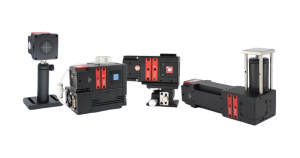
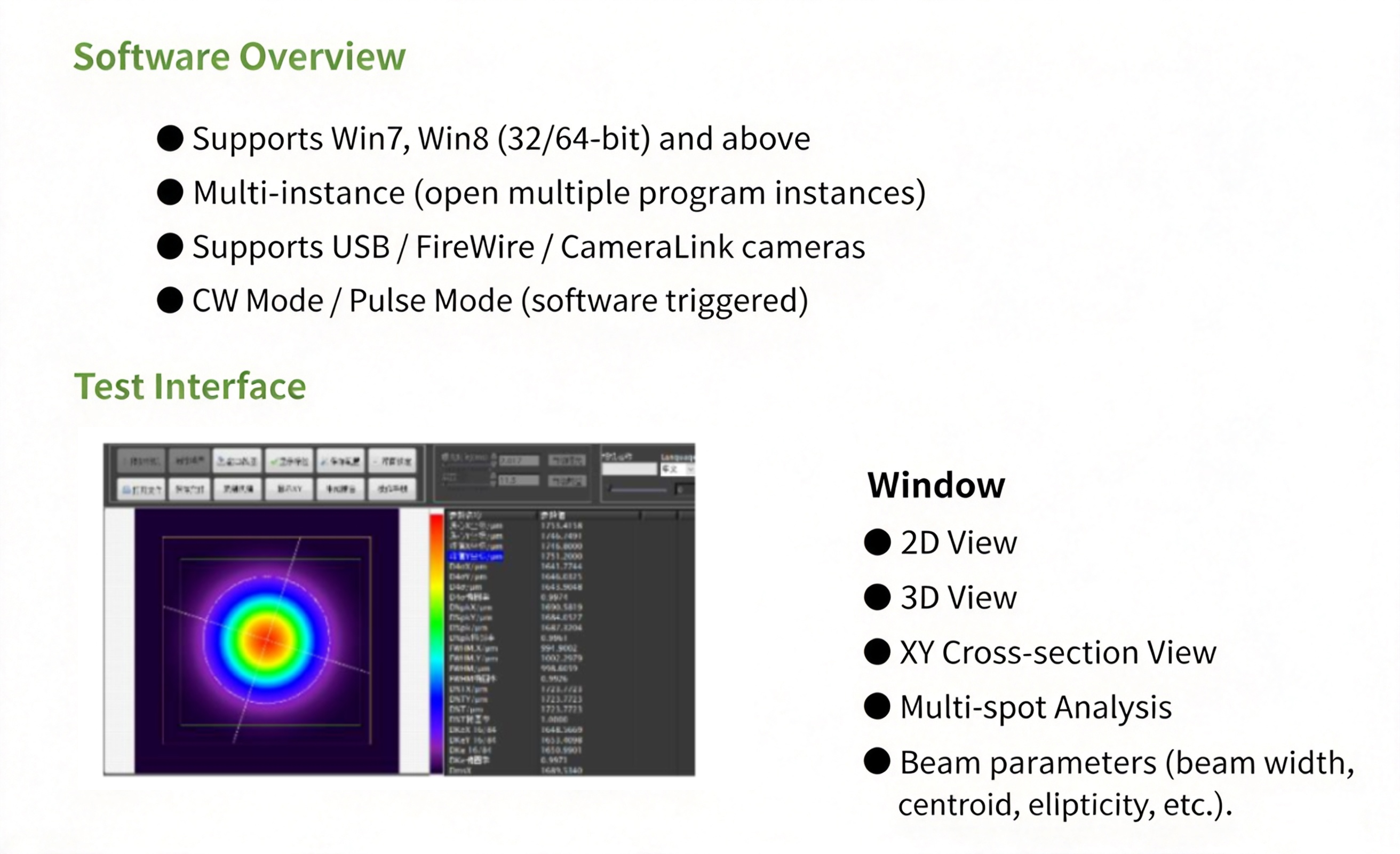
Our beam quality analyzer enables laser spot detection and measurement. We provide customized integrated beam quality analysis solutions and support multi-application development. The integrated design with matching attenuation scheme supports real-time exposure and gain adjustment.
Modular customization is available to meet different customer requirements. It is suitable for semiconductor lasers, solid-state lasers, fiber lasers, ultrafast lasers, laser ranging, and other fields. As a mature product with high cost-effectiveness, it is widely recognized by customers across multiple industries.
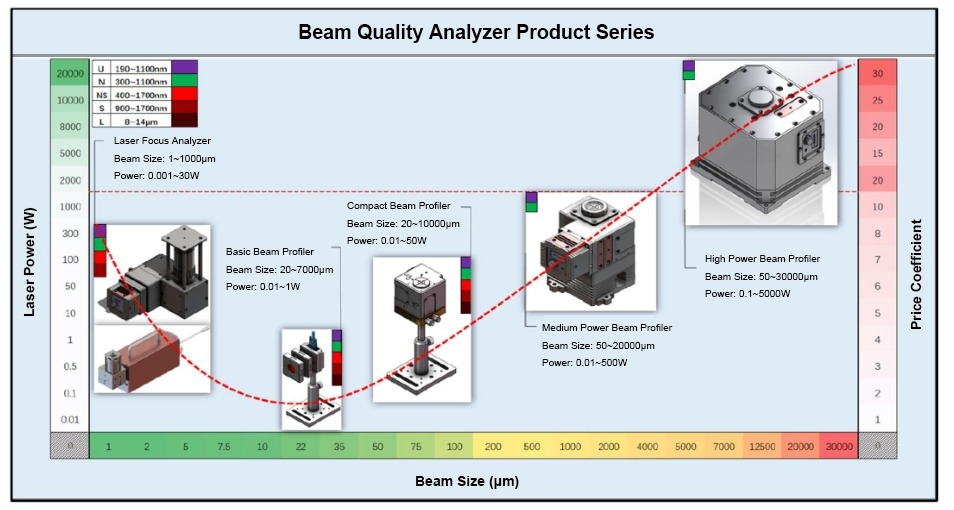
Beam Quality Analyzer Product Series
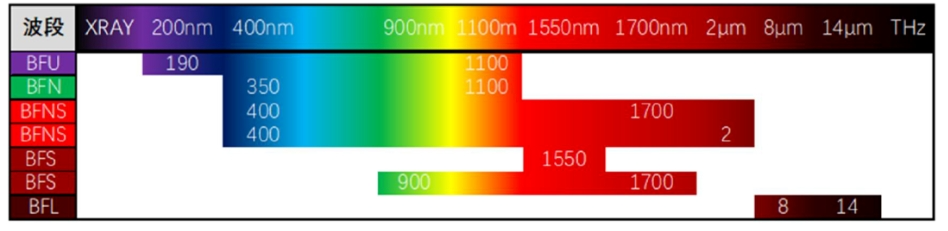
Spectral Coverage
Product Advantages:
1.Optional ultra-wide spectral multi-wavelength series, covering UV to long-wave infrared.
2.Wide spot diameter measurement range: meets most spot products on the market and supports extension to smaller spots.
3.Integrated design with matching attenuation scheme: built-in attenuation unit enables measurement of milliwatt-level low-power lasers. Optional attenuation schemes are available for different laser power requirements, allowing rapid measurement without additional accessories.
4.Fully independently developed software; underlying communication protocol available.
5.High cost-effectiveness; can replace imported laser beam quality analyzers for laser spot detection and measurement.
6.Customization: beam quality analyzers can be tailored to different requirements, including laser beam diameter and laser power.
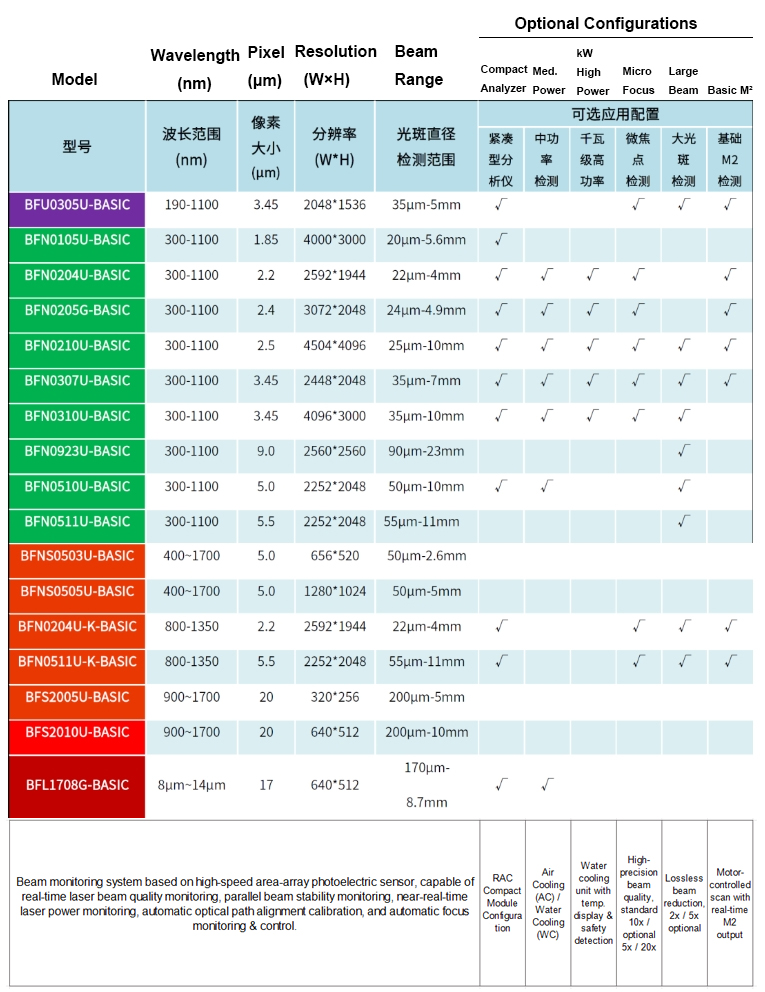
Multiple Models Available
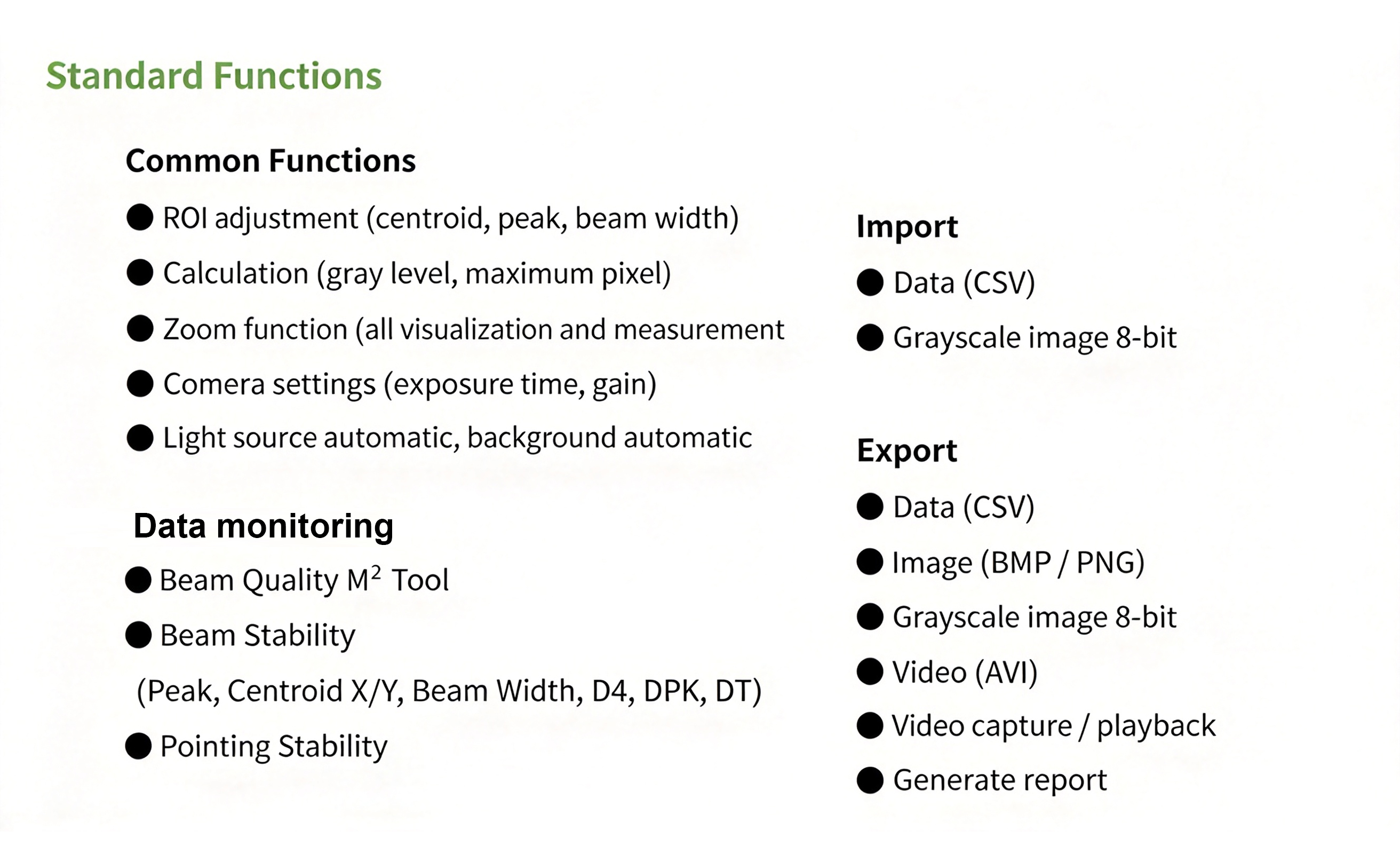
Convenient and Practical Software Design
Post time: Nov-02-2026